
Minimally invasive thymectomy eases MG symptoms over time
2-year study finds reductions in disease severity, need for medications
Written by |
- Myasthenia gravis patients who underwent minimally invasive thymectomy saw reductions in disease severity and treatment use over two years, a study showed.
- Left-sided VATS surgery may reduce disease severity and decrease reliance on medications like pyridostigmine and prednisone over time.
- The scientsts said the study had limitations, and called for larger, more in-depth research.
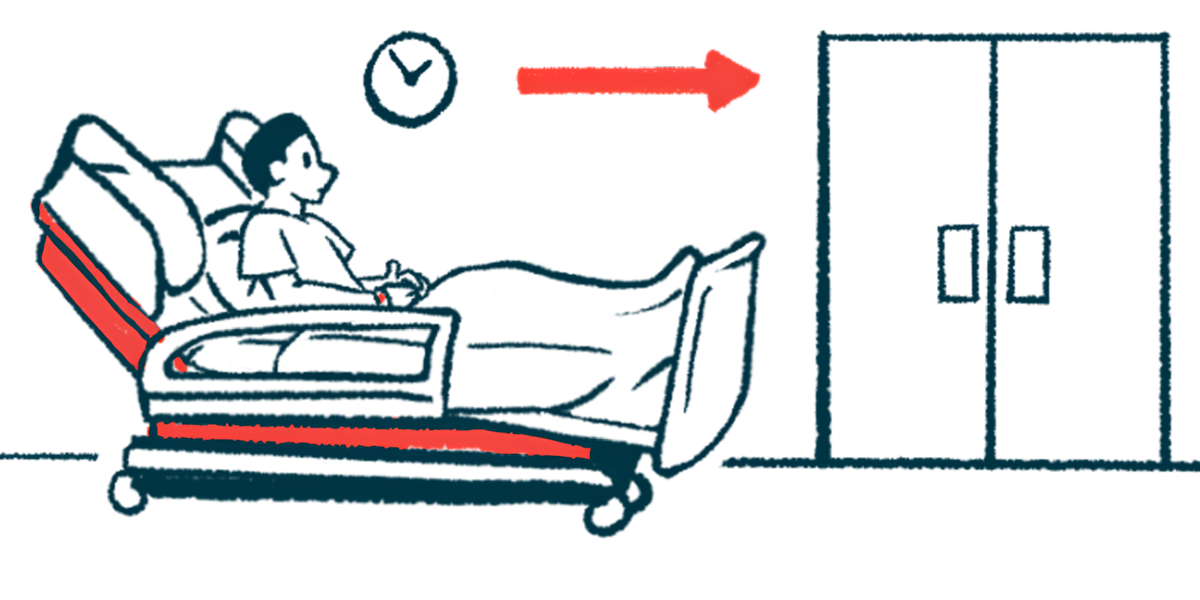
Myasthenia gravis (MG) patients who didn’t have thymus tumors saw reductions in disease severity and medication use two years after undergoing a type of minimally invasive thymectomy (surgery to remove the thymus gland), a study showed.
Most of the 33 patients showed minimal manifestations or better, and more than half no longer needed the approved therapies pyridostigmine (sold as Mestinon, with generic versions available) and prednisone, a corticosteroid.
The results showed “parallel neurological improvement and reductions in corticosteroid and symptomatic treatment requirements,” the researchers wrote. However, because the study did not include a comparison group of patients receiving medication alone, “these changes cannot be attributed solely to surgery,” they said.
The study, “Two-year outcomes after left-sided VATS extended thymectomy for nonthymomatous myasthenia gravis: a single-center retrospective cohort study,” was published in Surgical Endoscopy.

Left-sided VATS
MG is an autoimmune disease that disrupts communication between nerves and muscles, leading to fluctuating muscle weakness. MG is caused by self-reactive antibodies targeting acetylcholine receptor (AChR) proteins on muscle cells. The thymus, an organ of the immune system, is thought to play an important role in the disease.
Thymectomy is an established treatment option for certain MG patients without a thymus tumor (thymoma) because it can reduce the autoimmune activity underlying MG.
Minimally invasive approaches such as video-assisted thoracoscopic surgery (VATS) can be used for thymectomy through different surgical access routes, like the left or right side of the chest. “No single operative approach has been established as universally superior,” the researchers wrote. Data on clinical outcomes and treatment needs after a standardized left-sided VATS approach for thymectomy in people with MG are sparse.
The team of researchers in China retrospectively analyzed two-year outcome data from 33 MG patients without thymoma who underwent left-sided VATS extended thymectomy. Extended thymectomy involves removing the entire thymus along with surrounding fatty tissue.
Participants’ mean age at surgery was 31.67, and most were women (69.7%). Most (93.9%) had generalized MG, in which the disease affects several muscle groups, while two (6.1%) had disease affecting only eye-related muscles (ocular MG). About 82% had anti-AChR antibodies.
Before surgery, nearly two-thirds of patients (63.6%) had Myasthenia Gravis Foundation of America class 3 disease, indicating moderate weakness affecting several muscle groups not related to the eyes. The most frequently reported initial symptoms were drooping eyelids and difficulty swallowing, each affecting 78.8% of participants.
The surgery lasted a median of one hour, and patients remained in the hospital for a median of two days after the procedure. Analysis of the removed tissue showed thymus enlargement in 87.9% of participants.
Three participants (9.1%) experienced early post-surgery complications, including bleeding and myasthenic crisis, which is marked by severe breathing problems that require hospitalization. Two other patients (6.1%) experienced later neurological events, including a disease relapse and a myasthenic crisis.
Patients’ median daily doses of pyridostigmine, a drug that works to improve nerve-muscle communication, and prednisone, an anti-inflammatory and immunosuppressive medication, decreased progressively.
The proportion of patients not on pyridostigmine increased from 0% before surgery to 51.5% after two years. Similar trends were seen for prednisone, with the proportion of prednisone-free patients increasing from 18.2% before surgery to 81.8% after two years.
No significant differences were observed in the use of azathioprine, an immunosuppressant, which about one-third of patients took before surgery.
Neurological outcomes improved progressively after surgery. At two years, more than one-third of the participants (36.4%) reached minimal manifestations, defined as the absence of symptoms or disease-associated functional limitations, even though mild weakness can be detectable on examination.
Another 33.3% achieved complete stable remission, defined as the absence of symptoms and signs for at least one year without any MG-directed therapy. And 12.1% met pharmacological remission, meaning they had no MG symptoms while receiving immunosuppressive therapy. Overall, disease severity, as assessed by the MGFA classification system, decreased significantly over time.
Exploratory analyses found no clear associations between demographic, clinical, or thymic tissue factors and the odds of achieving minimal disease manifestations or better after two years. The small number of patients (six) who did not reach at least minimal manifestation status also limited the ability to identify reliable predictors of the outcome.
The researchers noted that the study’s small size and lack of a comparison group receiving medication alone make it difficult to determine whether the improvements were attributable to surgery or other factors, such as ongoing medical care and individualized medication adjustments.
They added that the study’s single-center, retrospective design, and relatively short follow-up also limit how broadly the findings can be applied.
Larger, multicenter studies, following patients over time and with “standardized medication protocols, validated disease-specific measures, comprehensive antibody testing, and longer follow-up are required to define the long-term neurological and treatment-related outcomes of unilateral minimally invasive thymectomy,” the researchers wrote.



Leave a comment
Fill in the required fields to post. Your email address will not be published.