The connection between myasthenia gravis and sleep apnea
 Fact-checked by
 Sleep apnea, a nighttime breathing problem, is common in myasthenia gravis (MG) and can significantly impair sleep and increase the risk of complications. Identifying and addressing apnea or other sleep problems in MG is an important part of any MG care plan.
In MG, the immune system mistakenly targets proteins important for nerve-muscle communication, leading to muscle weakness and fatigue. If the breathing muscles are affected, patients can develop MG respiratory complications, including sleep apnea — a condition in which breathing repeatedly starts and stops during sleep.
Prompt and appropriate treatment for MG and sleep apnea is key to maximizing physical and mental health.
How MG can increase the risk of sleep apnea
There are two main types of sleep apnea. In obstructive sleep apnea, relaxation of the throat muscles during sleep presses on the windpipe and blocks the airway. Central sleep apnea occurs when the brain fails to send proper signals to the muscles that control breathing.
In either case, when breathing stops, the brain will trigger a person to wake up and resume breathing. This leads to major sleep disruptions and a risk of heart and lung complications.
People with MG are at an increased risk of sleep apnea. Obstructive sleep apnea in MG is more common, although estimates of its prevalence vary. Central sleep apnea in MG is less established, though it is still reported.
MG may increase the risk of apnea and other nighttime breathing problems in a few different ways, including:
- weakness in the muscles that help keep the throat open makes airway collapse during sleep more likely
- respiratory muscle weakness can lead to slow or shallow breathing during sleep that limits oxygen intake
- certain MG treatments, including corticosteroids, can cause weight gain, in turn increasing the risk of obstructive apnea
Signs and symptoms to watch for
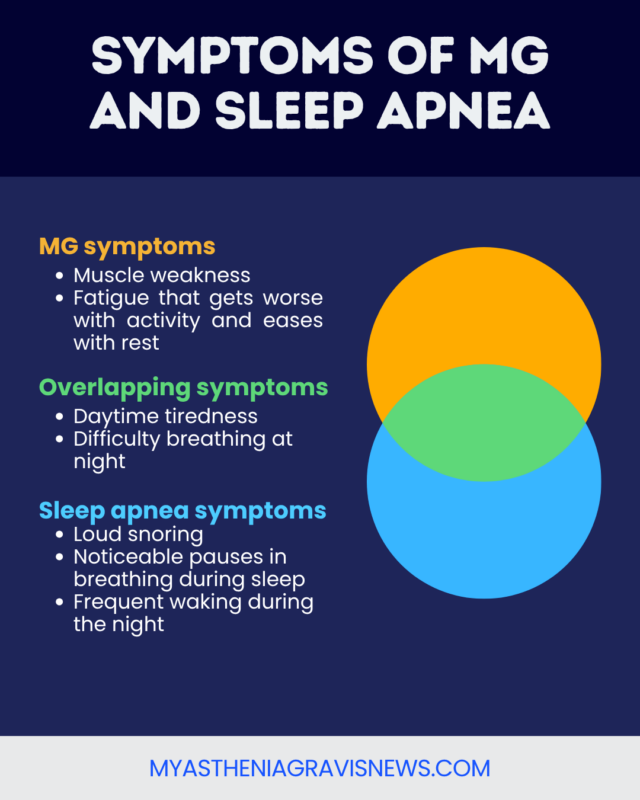
Daytime tiredness can be a sign of both MG fatigue and sleep apnea, making it challenging to identify nighttime breathing problems in people with MG.
MG-related fatigue often feels more muscle-specific, worsening with activity and improving with rest, whereas sleep apnea fatigue may feel like a persistent sleepiness throughout the day that’s not linked to activity.
Other possible signs and symptoms of sleep apnea for patients and their bed partners to look out for include:
- loud snoring
- noticeable pauses in breathing during sleep
- waking up gasping or choking during the night
- waking up with a dry mouth or sore throat
- waking up frequently at night
- headaches
- mood or cognitive changes during the day
People with daytime breathing issues in MG, respiratory muscle weakness, or weakness in the bulbar muscles that control the face and neck may be at a higher risk of sleep apnea or other nighttime respiratory problems.
Diagnosis and screening
If someone begins experiencing worsening daytime sleepiness in MG or displays other possible signs of sleep apnea, a patient’s neurologist may recommend further diagnostic testing and/or referral to a sleep specialist. The diagnostic process could include:
- home sleep tests: use a portable device to monitor nighttime breathing, oxygen levels, and heart rate at home
- sleep studies: use sensors to monitor breathing, oxygen levels, brain activity, movement, and other body systems in the lab overnight
Home sleep tests are convenient, but they tend to be less sensitive. A full sleep study for MG patients may be needed to accurately differentiate between general respiratory muscle weakness and obstructive sleep apnea.
Treatment options
Managing sleep apnea with MG requires an individualized approach that may include respiratory support, lifestyle changes, and adjustments to MG treatment.
Basic lifestyle changes that can help ease obstructive sleep apnea include:
- losing excess weight
- regular exercise, tailored to individual needs and abilities
- avoiding alcohol, sleeping pills, and smoking
- sleeping on the side or stomach, to help keep airways open
Nighttime breathing support may be needed. Noninvasive ventilation delivers a stream of compressed air via a face mask to help keep the airways open. There are two main types:
- continuous positive airway pressure (CPAP): uses constant air pressure
- bilevel positive airway pressure (BiPAP): uses lower air pressure during exhalation, higher pressure during inhalation
Often, doctors recommend BiPAP rather than CPAP for MG with obstructive sleep apnea, because lower air pressure during exhalation may be easier for weakened respiratory muscles.
Certain MG medications may influence breathing during sleep or sleep quality. A particular concern is with corticosteroids, which can lead to insomnia and weight gain that exacerbates apnea. If this occurs, treatment adjustments may be warranted.
Living well with MG and sleep apnea
Sleep apnea can significantly disrupt sleep and negatively affect quality of life. Good sleep habits, or sleep hygiene, can minimize the impact. MG sleep hygiene recommendations include:
- keeping a consistent sleep schedule
- getting at least seven or eight hours of sleep
- getting out of bed to do a low-light activity after 20 minutes of difficulty falling asleep
- avoiding long or late naps
- exercising and maintaining a healthy diet
- avoiding caffeine in the afternoons
- establishing a restful sleeping environment
Adhering to prescribed MG medications and apnea treatments is also important for improving sleep and preventing complications.
Sleep apnea can mimic a myasthenic crisis, a life-threatening medical emergency caused by weakened respiratory muscles. It is important to seek medical care immediately if MG symptoms at night are consistent with warning signs for myasthenic crisis, including:
- difficulty breathing or shortness of breath
- difficulty swallowing or speaking
- rapidly worsening muscle weakness
Open communication between people living with MG, caregivers, and healthcare providers can help with coordinated, appropriate treatment for MG and sleep apnea.
Myasthenia Gravis News is strictly a news and information website about the disease. It does not provide medical advice, diagnosis, or treatment. This content is not intended to be a substitute for professional medical advice, diagnosis, or treatment. Always seek the advice of your physician or other qualified health provider with any questions you may have regarding a medical condition. Never disregard professional medical advice or delay in seeking it because of something you have read on this website.