
Low-dose trazodone found in study to safely ease insomnia in mild MG
No symptom worsening seen with antidepressant commonly used as sleep aid
Written by |
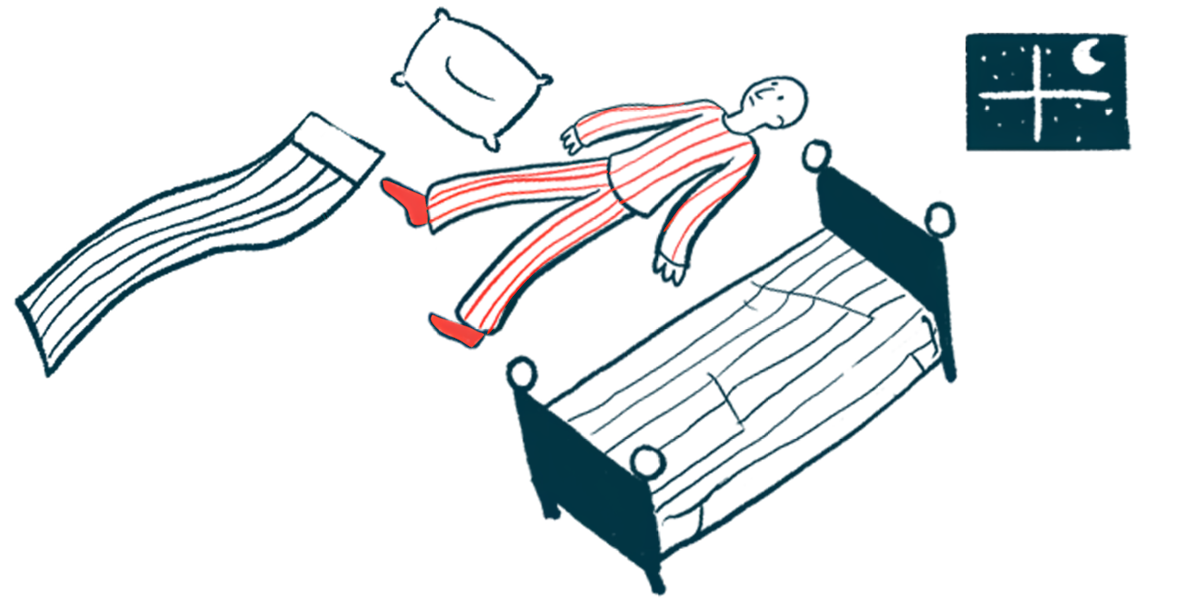
- Low-dose trazodone safely reduces insomnia in mild myasthenia gravis patients, a new study found.
- Use of the antidepressant was seen to improve sleep quality, and ease mild depression, without worsening MG symptoms or causing breathing issues.
- The researchers noted that common sleep medications are often not recommended for patients due to the potential to exacerbate MG symptoms.
For most people with mild, stable myasthenia gravis (MG), taking a low dose of trazodone hydrochloride, an oral antidepressant also commonly used as a sleep aid, can help ease insomnia —difficulty falling asleep, staying asleep, or waking up too early — without worsening MG symptoms or causing breathing problems.
That’s according to a small, retrospective study in China that evaluated the use of the prescription medication in MG patients with insomnia. Data from nearly 70 individuals with mild disease showed that sleep quality improved for nearly three-quarters. Depression scores also eased for many, mainly among those with mild depression, the analysis found.
“Low-dose trazodone hydrochloride demonstrates favorable efficacy and safety in [reducing] insomnia in patients with stable and mild MG,” the researchers wrote.
Their study, “Efficacy and safety of low-dose trazodone hydrochloride for insomnia in patients with myasthenia gravis,” was published in the journal BMC Neurology.

An autoimmune disease, MG disrupts communication between nerves and muscles, causing muscle weakness and fatigue. Individuals with MG may also experience mental health and sleep problems, such as insomnia.
Insomnia can make MG symptoms harder to control
Severe, ongoing insomnia may worsen daytime fatigue and muscle weakness, and make MG symptoms harder to control. In some cases, poor sleep and physical stress may also contribute to symptom worsening that can raise the risk of a myasthenic crisis, a potentially life-threatening complication marked by severe breathing difficulties.
Common sleep medications, including benzodiazepines and some non-benzodiazepine hypnotics, can have sedating and muscle-relaxing effects that may worsen MG symptoms, according to researchers. As such, these agents are generally not recommended for people with MG.
Certain antidepressants that also help regulate sleep, such as trazodone hydrochloride, may carry a lower risk of interfering with nerve-muscle communication.
To date, research on medications for sleep problems in MG remains limited, the researchers noted.
To learn more, a team from Capital Medical University in Beijing retrospectively reviewed clinical data from 68 people with MG who were given low-dose trazodone hydrochloride for insomnia.
The patients were seen at a single Chinese center from June 2018 to June 2025. Trazodone was taken once every night, at doses ranging from 25 mg to 100 mg, for at least four weeks, or about one month.
Most of the patients (75%) had mild generalized MG — when the disease affects several muscle groups — while the remaining 25% had ocular MG, meaning symptoms were limited to eye-related muscles. There were no reports of muscles involved in breathing being affected.
The researchers divided patients into three groups based on Self-Rating Depression Scale (SDS) scores. A total of 30 patients (44%) had mild depression, while 20 (29%) had moderate to severe depression. The remaining 18 (27%) did not have depression, per the scientists. No significant differences were observed between the groups in terms of sex, age, disease duration or severity, other medications being given, and trazodone treatment duration.

Better sleep quality seen for those given trazodone
After taking trazodone, sleep quality improved for most patients, the analysis found.
Specifically, scores on the Pittsburgh Sleep Quality Index (PSQI), a measure in which higher scores indicate worse sleep, dropped for 49 patients, or 72%. Overall, PSQI scores were significantly lower after treatment, with reductions seen in all three depression groups.
Drops in SDS scores, reflecting less depression, were also seen for nearly two-thirds of patients, or 44 in total. The reduction in scores was significant in the mild depression group, but not in the group with moderate to severe depression. The researchers noted this may reflect trazodone’s stronger sleep-improving effect, rather than a strong antidepressant effect, at low doses.
Importantly, MG symptoms did not worsen after trazodone treatment, the researchers noted. No patient had a score increase on the MG Activities of Daily Living (MG-ADL) scale, which would reflect a greater impact of MG symptoms on daily activities. There were also no reports of worsening symptoms or breathing difficulties, per the team.
MG-ADL scores remained unchanged in 38 participants (56%), and reduced (improved) in the remaining patients. Overall scores were significantly reduced after treatment, with the lowest scores seen in the group without depression.
Adverse events were reported for four people, or 6% of patients. Low blood pressure was seen in two patients, dizziness in one, and nausea in one. All adverse events were mild in severity and did not lead to treatment discontinuation. The low blood pressure was resolved after medications to treat high blood pressure were stopped, the team noted.
Overall, the findings suggest that a “low-dose trazodone exerts a beneficial effect on … insomnia and mild depression in patients with stable mild MG, without myasthenia symptoms deterioration,” the researchers wrote, adding that this and other new medications “are highly likely to expand treatment options for MG patients with [co-occurring] insomnia.”
Still, “further larger-scale studies are required to clarify the safety and efficacy of trazodone in patients with moderate-to-severe MG,” the team wrote.


Share Haw
I used trazodone to help me fall asleep even before my generalized MG diagnosis but differently to take advantage of its drowsiness effect. My doctor prescribed 1/4 of the lowest dose pill as needed on nights I was having difficulty falling asleep. For 20 years, it worked well and I only took it occasionally. Sometimes I would wake up after it wore off. However, a year ago, I started getting twitchy feet and legs instead of drowsiness when I took it.