
I’m learning to live with my MG body in a new way and love it anyway
This disease changes your relationship with your body — and with yourself
Written by |

Loving your body is easy advice to give when your body behaves. When it wakes up when you do, moves when you ask, and carries you through the day without protest. But when you live with myasthenia gravis (MG), the relationship you have with your body becomes something far more complicated. It becomes part partnership, part negotiation, and part uneasy truce.
My relationship with my body didn’t break in one dramatic moment. It frayed slowly, starting back in 2011 when the first symptoms appeared.
I didn’t have a name for what was happening then. I only knew that something was very wrong — a weakness, a slipping of control that didn’t match my age or the life I was living. Years passed before anyone connected the dots. By the time I was formally diagnosed with seronegative generalized MG in 2018, I had already learned to distrust my body. I had accepted that my body was, in a word, FUBAR (a favorite military acronym that I’m not allowed to say out loud; my editors get mad at me).
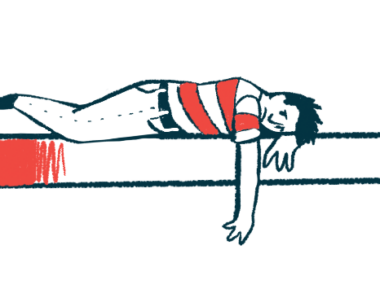
MG forces you to renegotiate the terms of your existence. Muscles you once relied on become unreliable narrators. Your voice can fade mid-sentence. Your eyelids can betray you in the middle of a conversation. Your legs can give out in the grocery store. Your breath can thin out like a frayed thread. When your MG stage sits somewhere between 4 and 5, as mine does, these aren’t rare events. They’re part of the daily landscape.

My body, my self
And yet, this isn’t a story about giving up on your body. It’s a story about learning to live with it in a new way and finding ways to love it anyway.
MG teaches me to listen differently. It sharpens my awareness in ways I never expected, pushing me to become fluent in the subtle language of my own body. A blurring of text becomes a quiet warning. A heaviness in my jaw becomes a cue to pause. A shift in my breathing becomes a signal to slow down. Over time, I’ve started noticing things I once brushed aside, learning to interpret the whispers before they turn into roars.
It also asks me to practice a kind of forgiveness I never imagined needing. It’s easy to feel betrayed by a body that won’t cooperate, a body that drops me into endless cycles of appointments, tests, and waiting rooms. But over time, something in me has softened. I’ve started to see that my body isn’t working against me, but is working for me under impossible circumstances. It’s fighting a battle I can’t see. It’s carrying me through a life that still holds joy, purpose, and meaning, even if that life looks different from the one I once imagined.
MG also forces me to redefine strength. Strength is no longer about endurance or pushing through pain. It’s not about how much I can carry or how far I can go. Strength now looks like resting without guilt, asking for help without shame, pacing myself with intention, and honoring my limits instead of resenting them. Some days, strength is simply choosing to stay gentle with myself when everything in me wants to be angry.
And perhaps most unexpectedly, MG has deepened my compassion for myself. When your body becomes unpredictable, you learn to meet it with a kind of tenderness you didn’t know you were capable of. You learn to celebrate the days when your legs hold steady, when your voice stays strong, when your eyelids cooperate. You learn to savor the small wins. You learn to stop measuring your worth by your productivity. You learn to exist in your body as it is, not as you wish it were.
MG changes your relationship with your body, yes. But it also changes your relationship with yourself. It teaches you to be patient, to be adaptable, to be honest about your needs. It teaches you to live in the present moment because the future is too uncertain to plan around. It teaches you to love yourself in a way that isn’t conditional on performance.
As we move into February, a month focused on love, care, and connection, it feels right to start here with the relationship that shapes all the others. The relationship between me and my body. The one MG complicates, challenges, and ultimately transforms.
Before we can discuss or consider intimacy or caregiving or partnership, we have to talk about this. We have to talk about what it means to live inside a body that doesn’t always cooperate, and how we learn to stay in a relationship with it anyway.
And maybe, just maybe, how we learn to love it again.
Note: Myasthenia Gravis News is strictly a news and information website about the disease. It does not provide medical advice, diagnosis, or treatment. This content is not intended to be a substitute for professional medical advice, diagnosis, or treatment. Always seek the advice of your physician or other qualified health provider with any questions you may have regarding a medical condition. Never disregard professional medical advice or delay in seeking it because of something you have read on this website. The opinions expressed in this column are not those of Myasthenia Gravis News or its parent company, Bionews, and are intended to spark discussion about issues pertaining to myasthenia gravis.


Leave a comment
Fill in the required fields to post. Your email address will not be published.