
 Discussion
Partners together: Effective collaboration with your healthcare provider
Last updated May 1, 2024, by Marisa Wexler, MS
 Fact-checked by Patrícia Silva, PhD
Myasthenia gravis (MG) is a complex, chronic disease. While MG care is usually led by a neurologist, most people with MG will see many types of specialists depending on their symptoms and progression of the disease.
Coordinating with different care providers can be challenging. For that reason, it can be helpful to know how to navigate and be proactive about getting needs met.
Neurologist
MG is a neuromuscular disorder involving antibodies that interfere with the signals nerve cells use to control muscle movements. Eventually, it causes symptoms including muscle weakness.
Because the disease affects nerve function, a neurologist — a doctor who specializes in disorders affecting the nervous system — is usually the main care provider.
The neurologist typically confirms the diagnosis of MG, helps track the disease progression, and helps decide the right course of treatment.
For those with ocular MG, a specific form of the disease that affects the eyes, care may be headed by a neuro-ophthalmologist, which is a specialist in eye problems related to the nervous system.
Factors to consider when choosing a neurologist for MG care include the following:
- Open communication is essential to getting the best possible healthcare. It’s important to look for a neurologist who you trust and is responsive to hearing what you have to say.
- Everyone has different preferences about how they like to receive medical care; some people prefer a doctor who will be empathetic and caring, while others prefer a provider who’s more businesslike. It’s important to find doctors with whom you feel you can comfortably share information.
- You may need to see a neurologist regularly, so it is preferable when they aren’t too far away and are easy to get in touch with. Telehealth appointments by phone or video call are increasingly becoming an option but may not be offered in all situations.
Other healthcare providers
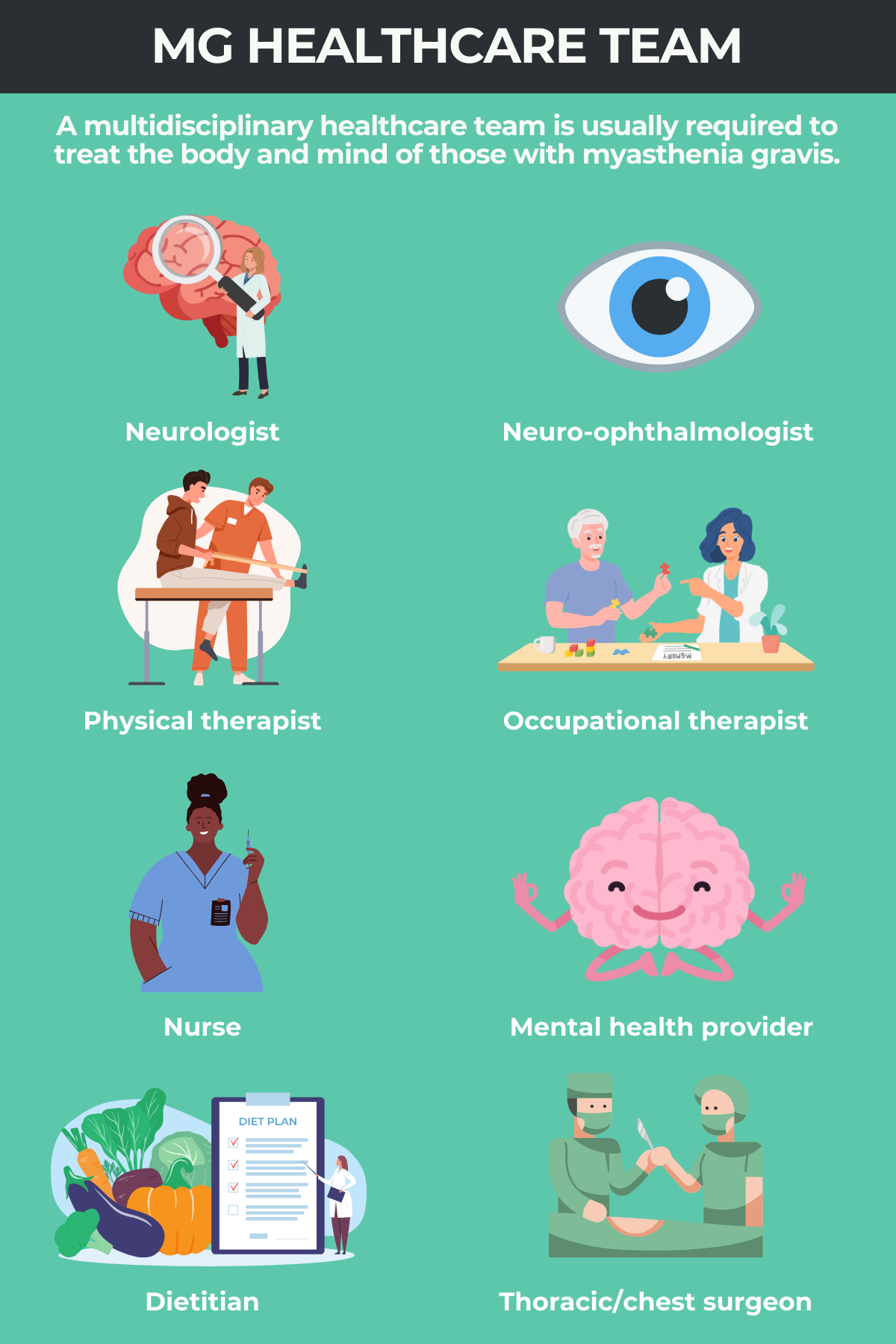
In addition to a neurologist, there are often other types of healthcare providers who may be part of a healthcare team for someone with MG. Because MG can be different for each person, the specific members of the interdisciplinary team may vary from person to person. Generally, they may include:
- physical therapists, who help people improve and maintain their physical function
- occupational therapists, who create strategies for navigating day-to-day life with a chronic illness
- nurses, especially a nurse with expertise in neurology, who help MG patients with many different aspects of the disease, including the management of treatments
- psychiatrists, social workers, therapists, and counselors who help patients develop coping strategies and manage their mental health
- dietitian,s who can help MG patients maintain a healthy diet, especially if the disease is causing difficulty eating
- surgeons, should surgery become necessary; in particular thoracic (chest) surgeons if patients are having a thymectomy (surgical removal of the thymus).
Specialty care centers
It is generally recommended people with MG receive care from a specialist who has expertise in dealing with the disease.
The Myasthenia Gravis Foundation of America has an online tool for searching for MG specialists in the U.S.
Be proactive with communication
Communicating with healthcare providers and coordinating among different providers can be challenging. People with MG often have to be proactive to ensure their voices are heard.
The following are some ways to help yourself be heard:
- Ask questions if anything is unclear.
- Don’t be afraid to be a vocal critic and speak up if something isn’t working.
- Get instructions in writing to avoid miscommunications.
- Make sure your providers have one anothers’ contact information for sharing information.
- Take advantage of resources such as online portals to stay in touch with your care team.
- Ask for help from friends, family, and others in the MG community, including patient support groups.
Myasthenia Gravis News is strictly a news and information website about the disease. It does not provide medical advice, diagnosis, or treatment. This content is not intended to be a substitute for professional medical advice, diagnosis, or treatment. Always seek the advice of your physician or other qualified health provider with any questions you may have regarding a medical condition. Never disregard professional medical advice or delay in seeking it because of something you have read on this website.
Related articles
-
Discussion
-
 Discussion
-
 Discussion
-
 Discussion
-
 Discussion
-
 Discussion