
 Discussion
Myasthenia gravis and driving: What to know
Last updated June 26, 2025, by Susie Strachan
 Fact-checked by Patricia Silva, PhD
Driving with myasthenia gravis (MG) can present unique challenges. Symptoms like muscle weakness, double vision, and fatigue can make it harder to stay alert, judge distances, or respond quickly to changing road conditions.
Because MG and vehicle operation don’t always mix smoothly, it’s important to recognize how the condition might affect your ability to drive. With careful planning, open communication with your MG healthcare team, and self-awareness, you can take steps to stay safe behind the wheel.
How MG can affect driving
A chronic neuromuscular disorder, MG is caused by the immune system mistakenly attacking proteins involved in the communication between your nerves and muscles.
This weakens your muscles, including those that control eye and limb movement, and makes it harder to perform specific tasks. On the road, it might affect merging onto highways, driving at night, and staying aware of your surroundings.
Depending on your type of MG, you may experience mild or well-managed symptoms with treatment, or possibly unpredictable changes that make driving difficult or unsafe.
For many people living with MG, vision problems, drooping eyelids (ptosis), and muscle fatigue may fluctuate daily or even hourly.
Staying road ready
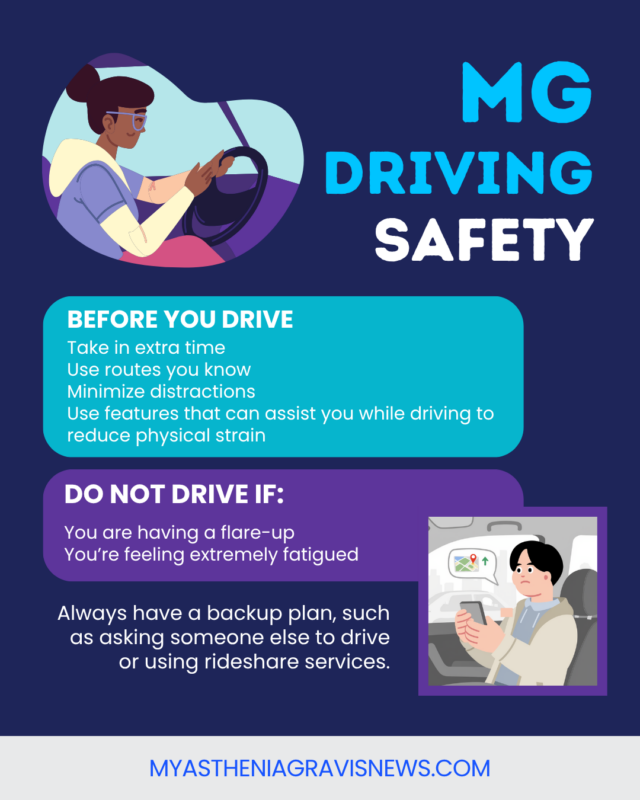
Driving with MG often means planning ahead and understanding your physical limits. If symptoms are flaring or fatigue sets in, it may be safer to delay your trip or choose alternative transportation.
When you do feel well enough to drive, consider building in extra time, using routes you know, and minimizing distractions.
Features like lane assist, backup cameras, and automatic climate control can help reduce physical strain and cognitive load behind the wheel. These types of adjustments — and other tips for driving with MG — can help make daily transportation more manageable.
When to avoid driving
There may be times when it’s safer to avoid driving, such as during a flare-up or when you’re feeling extremely fatigued. In these situations, it’s important to have a backup plan, such as asking someone else to drive or using rideshare services.
For some, the time may come when driving is no longer safe. While this decision can be difficult, it doesn’t mean you lose your independence. Public transit, taxis, and rideshare services in cities, or community driving programs in rural areas, can help maintain your mobility.
Communicating with healthcare providers
Whether you’re newly diagnosed with MG or have lived with it for years, it is wise to speak with your healthcare team about how it impacts driving.
For example, if you’ve noticed changes in focus, awareness, or muscle strength, bring this up with your doctor. Some MG treatments may cause drowsiness or dizziness, so reviewing side effects can also help you plan for safer driving.
In addition to working with your primary MG doctor, receiving regular eye exams is important — some MG medications may increase the risk of cataracts or glaucoma. Vision changes like double vision and dry eyes can also affect driving.
- Your eye doctor may suggest strategies for managing double vision, such as alternating an eye patch or using prism glasses to help realign images.
- If you have trouble fully closing your eyes while sleeping, dry eyes can develop, leading to irritation; your doctor may recommend lubricating drops or nighttime eye protection for relief.
Finally, an occupational therapist can assess your driving ability and suggest vehicle modifications to improve safety. In some cases, physical or cognitive rehabilitation may help maintain the skills needed for safe driving.
Understanding legal and licensing considerations
In the U.S., it’s your responsibility to make sure you can drive safely. Some states may require you to report medical conditions such as neurological disorders that could impact driving safety. In some cases, doctors may also need to report their concerns.
Your MG healthcare provider can help you understand whether driving restrictions apply to you.
If you need to disclose your condition, your local driver’s services office may request medical documentation or periodic assessments to confirm that you can drive safely. It’s also a good idea to check with your car insurance agent, as your policy may have specific requirements related to medical conditions.
You may also wish to speak with a lawyer or a professional familiar with driving regulations in your state or province if you have concerns about legal, personal, or car insurance considerations related to MG, or their implications.
Myasthenia Gravis News is strictly a news and information website about the disease. It does not provide medical advice, diagnosis, or treatment. This content is not intended to be a substitute for professional medical advice, diagnosis, or treatment. Always seek the advice of your physician or other qualified health provider with any questions you may have regarding a medical condition. Never disregard professional medical advice or delay in seeking it because of something you have read on this website.
Related articles
-
Discussion
-
 Discussion
-
 Discussion
-
 Discussion
-
 Discussion
-
Discussion