
Vyvgart plus low-dose steroids is safer treatment for severe gMG: Study
Combo found effective, with fewer side effects than methylprednisolone alone
Written by |
- Using low-dose methylprednisolone along with Vyvgart is safer, but equally as effective as high-dose steroids for treating severe generalized myasthenia gravis.
- The combination reduced side effects and prevented early symptom worsening compared with methylprednisolone alone.
- The combo was tested in China, where glucocorticoids are typically the first-line treatment for gMG.
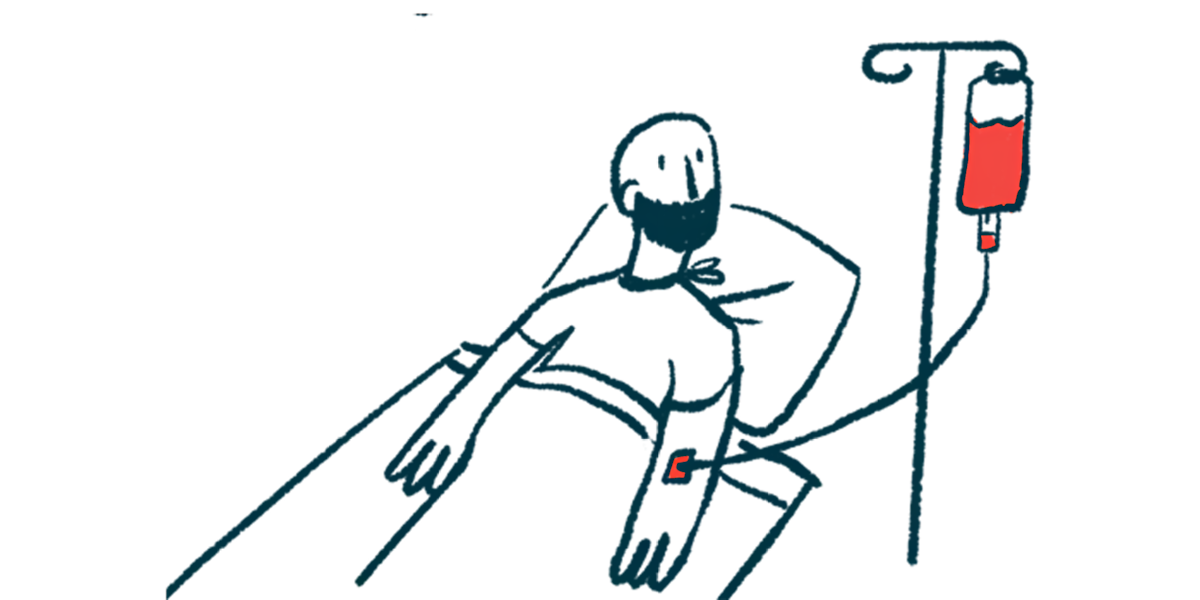
Vyvgart (efgartigimod) combined with a low 250 mg dose of the glucocorticoid methylprednisolone may offer a safer and equally effective treatment option for people with severe generalized myasthenia gravis (gMG), according to a new study from China.
gMG patients treated with this combination showed comparable reductions in disease severity relative to those receiving Vyvgart with higher methylprednisolone doses or standard high-dose methylprednisolone alone, the data showed.
However, these individuals experienced no early symptom worsening — a common concern with high-dose glucocorticoids, a class of corticosteroids — and had fewer corticosteroid-related side effects, the researchers noted.
These findings suggest that Vyvgart combined with low-dose methylprednisolone may offer “a promising regimen for severe gMG,” the researchers wrote, while noting that “further prospective, multicenter trials are needed to validate this result in the future, particularly for the long-term efficacy and safety of treatment regimens.”
The study, “Efgartigimod Combined with Glucocorticoids in the Treatment of Severe Generalized Myasthenia Gravis: A Single-Center, Retrospective Cohort Study,” was published in Neurology and Therapy.

In myasthenia gravis (MG) the immune system wrongly produces self-reactive antibodies that attack proteins essential for nerve-muscle cell communication. This leads to MG symptoms such as muscle weakness and fatigue. Most often, these antibodies target acetylcholine receptor (AChR) proteins on muscle cells.
Cheap, fast-acting steroids typically used first in China
Glucocorticoids, a type of anti-inflammatory and immunosuppressive medication, “are still considered the first-line drugs for gMG in China due to their low medical costs and rapid effects in clinical practice,” the researchers wrote.
High-dose intravenous methylprednisolone (IVMP), followed by a gradual dose reduction, is commonly used in more severe cases. Intravenous refers to administration directly into the bloodstream.
While usually effective, high glucocorticoid doses can paradoxically worsen MG symptoms in the early phase of treatment, a reaction known as early transient aggravation. This can increase the risk of myasthenic crisis, a life-threatening episode marked by respiratory failure.
In addition, long-term glucocorticoid treatment can lead to serious side effects, including high blood pressure, diabetes, and weak bones, known as osteoporosis. As such, clinicians often seek ways to reduce patients’ reliance on high glucocorticoid doses.
A newer therapy, Vyvgart (efgartigimod), works by boosting the breakdown of antibodies, including those that drive MG, without broadly suppressing the immune system. The therapy is approved as an add-on to standard treatment for adults with gMG who are positive for anti-AChR antibodies.
Now, a team of researchers from Shijiazhuang People’s Hospital sought to determine if Vyvgart paired with lower IVMP doses could maintain treatment effectiveness while reducing the risk of early worsening and side effects. To that end, the researchers conducted a retrospective study (Chictr2400080921) using patient data from December 2023 to May 2024.
The team analyzed clinical records from 57 adults with severe gMG who were treated with IVMP or IVMP combined with Vyvgart at the hospital’s MG center. The patients’ median age was 50, and 60% were men.
One group, comprising 2o people, received IVMP alone, starting with a high, 1,000 mg daily dose that was halved every two days to 62.5 mg.
The other three groups received Vyvgart together with different IVMP starting doses — 1,000 mg (seven people), 500 mg (10 people), or 250 mg (20 people) — which were also halved every two days to 62.5 mg. Vyvgart was given as a 10 mg/kg infusion on days one and eight.
After the IVMP taper, patients in all groups were switched to oral prednisone acetate, a glucocorticoid used for longer-term tapering.

More side effects seen with Vyvgart plus high-dose methylprednisolone
The four groups showed no significant differences in initial characteristics, such as age, MG severity, or disease duration.
After two weeks, the greatest improvement was observed among patients receiving Vyvgart plus high-dose IVMP (1,000 mg). These individuals demonstrated a 14-point reduction in their median Quantitative Myasthenia Gravis (QMG) score, which assesses overall disease severity.
Those treated with IVMP alone showed the smallest early improvement, with QMG scores dropping by eight points. The difference between these two groups was statistically significant, according to the researchers.
Patients treated with Vyvgart plus 500 mg or 250 mg IVMP showed QMG score reductions that fell between these two extremes.
After about three months, however, all four groups achieved similar overall improvement, with no significant differences in their QMG scores.
[These results provide] important guidance for clinical practice. … [Vyvgart plus low-dose methylprednisolone] can not only ensure efficacy but is also well tolerated.
Early transient exacerbations occurred in 15 participants (26%) overall, with the highest rate seen in those receiving IVMP alone (12 patients, or 60%), followed by Vyvgart plus high-dose IVMP (three patients, or 43%). In contrast, no such events were reported in participants treated with Vyvgart plus 500 mg or 250 mg IVMP.
As expected, the IVMP-only group also showed the highest rate of glucocorticoid-related side effects, seen in 85% of patients. These included electrolyte disturbances (60% vs. 0%-10% with Vyvgart), elevated blood sugar (which may precede diabetes; 35% vs. 5%-28.6%), and osteoporosis (30% vs. 0%-5%).
Rates of high blood sugar across the Vyvgart groups decreased in frequency as IVMP doses were tapered. Overall, the burden of side effects — including the lowest rate of liver function issues — was lowest in the Vyvgart plus 250 mg IVMP group.
Overall, these results provide “important guidance for clinical practice,” the team concluded, noting that “a combination regimen of low-dose IVMP can be selected when treating severe patients with gMG with positive AChR antibodies.”
Using Vyvgard plus low-dose methylprednisolone “can not only ensure efficacy but is also well tolerated,” the team wrote.


Leave a comment
Fill in the required fields to post. Your email address will not be published.