
MuSK antibodies may mark more severe form of MG, study finds
Patients often had speech, swallowing problems and needed more treatment
Written by |
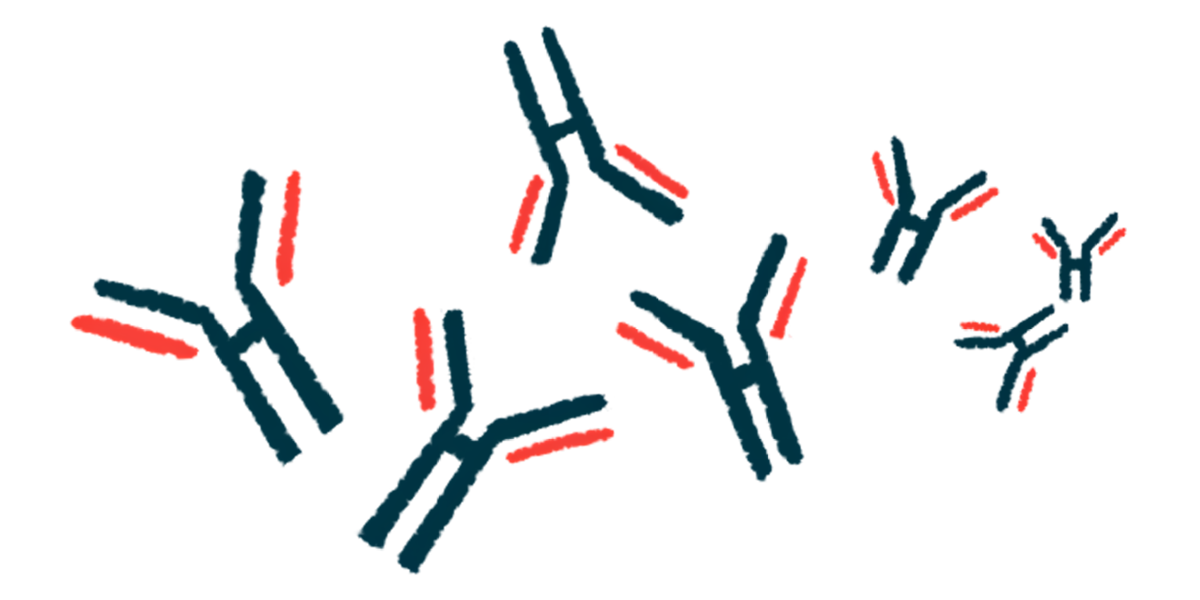
Antibodies against the muscle-specific kinase (MuSK) protein may help identify a generally more severe form of myasthenia gravis (MG), one often marked by problems with speech and swallowing and a need for more intensive treatment, a study found.
This form of MG varied unexpectedly in frequency among seronegative MG patients across the world, with the highest rates seen around 40 degrees north latitude, which includes parts of the U.S. and Europe, researchers noted in the study, “Relative frequencies of muscle specific kinase antibody myasthenia in 46 centres worldwide,” which was published in Brain.

MuSK antibodies found in nearly 1 in 3 seronegative cases
MG is an autoimmune disease in which self-reactive antibodies mistakenly attack proteins needed for nerve–muscle communication, causing muscle weakness. Most patients have antibodies against the acetylcholine receptor (AChR).
Researchers tested serum samples from patients without AChR antibodies — a group known as seronegative MG — from 35 centers across six continents to look for antibodies against MuSK, another protein that helps maintain normal communication between nerves and muscles. Of 465 adults with generalized MG, in which weakness affects muscles beyond the eyes, 143 (30.8%) had anti-MuSK antibodies.
Anti-MuSK antibodies were not found in 147 patients who already had antibodies against AChR, suggesting that the two types of antibodies rarely occur together. They were also absent in 63 adults whose disease affected only the eye and eyelid muscles, known as ocular MG, suggesting that anti-MuSK antibodies were mainly linked in this study to generalized MG rather than purely ocular MG.
Patients with anti-MuSK antibodies had more severe disease, which was measured using the MG Foundation of America (MGFA) classification, where higher classes indicate more severe muscle weakness and disability. The proportion of patients with MGFA classes 4 and 5 was significantly higher in those with anti-MuSK antibodies than in those without these antibodies (51% vs. 18%).
Speech, swallowing problems were more common
A major clinical feature of MG linked to anti-MuSK antibodies was bulbar involvement. The term bulbar refers to muscles controlled by nerves in the brainstem, including those used for speaking, chewing, swallowing, and facial movements. Patients with anti-MuSK antibodies were more likely to have weakness in these muscles than patients without those antibodies.
Treatment patterns also differed. Patients who tested positive for antibodies against MuSK more often underwent thymectomy, which is the surgical removal of the thymus gland (41% vs. 24%). However, examination of the removed thymus tissue usually showed either normal findings or shrinkage, known as atrophy, and thymus tumors were uncommon.
Most patients received corticosteroids and other immunosuppressants. However, those with anti-MuSK antibodies more often received second-line treatments, including plasmapheresis, a procedure that removes and replaces the liquid component of blood to reduce levels of self-reactive antibodies; intravenous immunoglobulin, or IVIG, an infusion of antibodies from healthy donors; cyclosporine; or cyclophosphamide.
Patients without anti-MuSK antibodies were more likely to be treated only with cholinesterase inhibitors, which are medications that improve communication between nerves and muscles without directly suppressing the immune system. This suggests that MuSK-positive disease is generally more difficult to control and often requires more aggressive treatment.
Despite having more severe disease initially, patients with anti-MuSK antibodies “improved following the more aggressive treatments received,” the researchers wrote. At follow-up, severe disease was uncommon in both groups. However, bulbar symptoms remained more frequent in patients with anti-MuSK antibodies.
The study also included 42 children with seronegative MG. Seventeen (40%) tested positive for antibodies against MuSK. The clinical pattern was similar to that seen in adults, with more extensive treatment among children with anti-MuSK antibodies. Although the number of children was small, bulbar symptoms remained more common in those with anti-MuSK antibodies.
The researchers also examined how often MG linked to anti-MuSK antibodies occurred in different parts of the world. It was found on every continent, supporting the idea that it occurs globally. However, among patients with AChR-antibody negative MG, the frequency of MuSK antibodies ranged from 0% to 47% among different medical centers in the Northern Hemisphere, “an unexpected and surprising distribution,” the researchers wrote.
The highest frequencies occurred in regions located roughly between 30 and 50 degrees north latitude, with a peak around 40 degrees north. Frequencies were much lower farther north, such as in northern Europe, and also appeared to decline in lower-latitude parts of Asia. This pattern was consistent with a bell-shaped curve, raising “interesting questions regarding the environmental and genetic factors involved,” the researchers wrote.



Leave a comment
Fill in the required fields to post. Your email address will not be published.